Smaller sizes
More customers prefer mini-sized baked goods and snacks.
Bimbo Bakeries USA · Class project
A research-led breakfast subscription proposal for Bimbo Bakeries USA, developed from nine participant sessions in a three-person class project.
Shared responsibility across research and design
Used to shape the primary research plan
Interview, observation, and projective activities
Three sessions conducted by each teammate
Team & Contributions
Team members: Yaxuan Xiao, Henry Yang, and Jinheng Cen. We shared the research and design work evenly.
Client Need
The brief focused on making products in Bimbo Bakeries USA's breakfast and bread-and-buns categories more relevant to younger consumers.
Before creating a product, we needed to understand how this age group eats, shops, and makes decisions within the constraints of everyday life.
01 · Secondary Research
We studied shifts in food formats, convenience, health, indulgence, and flavor to form an initial view of younger consumers' expectations.
More customers prefer mini-sized baked goods and snacks.
Convenience is increasingly important when Gen Z selects food.
Health awareness and food indulgence coexist among younger consumers.
Customers seek more stimulating and distinctive snack flavors.
02 · Session Design & Recruitment
Each 90-minute session combined direct questions with evidence from participants' environments and a creative exercise about their ideal snack.
Discuss routines, motivations, constraints, and food-purchase decisions.
Photograph food cabinets and ask participants about what they keep within reach.
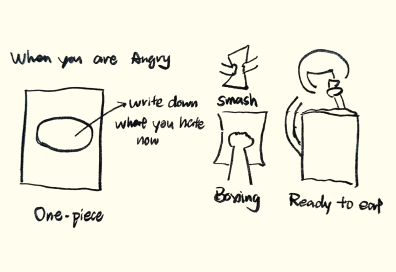
Ask participants to draw an ideal snack and express needs beyond direct answers.
03 · Conduct Sessions & Collect Evidence
We documented what participants told us, photographed their food cabinets during observation, and collected drawings from the projective exercise. These three forms of evidence helped us compare intentions with everyday behavior.
All currently living in the United States
Focused on younger breakfast consumers
Required for every recruited participant
User Insights
Without time, transportation, or nearby variety, breakfast options narrow quickly.
Breakfast often happens during class, work, or a commute.
People want novelty without committing to a full package or unfamiliar flavor.
Portion needs change with schedule, appetite, and health goals.
Baked goods can provide comfort, reward, and social connection.
04 · Find the Opportunity
We transferred session notes into post-its, grouped related ideas, and mapped the patterns through a 2×2 framework and a Venn diagram.
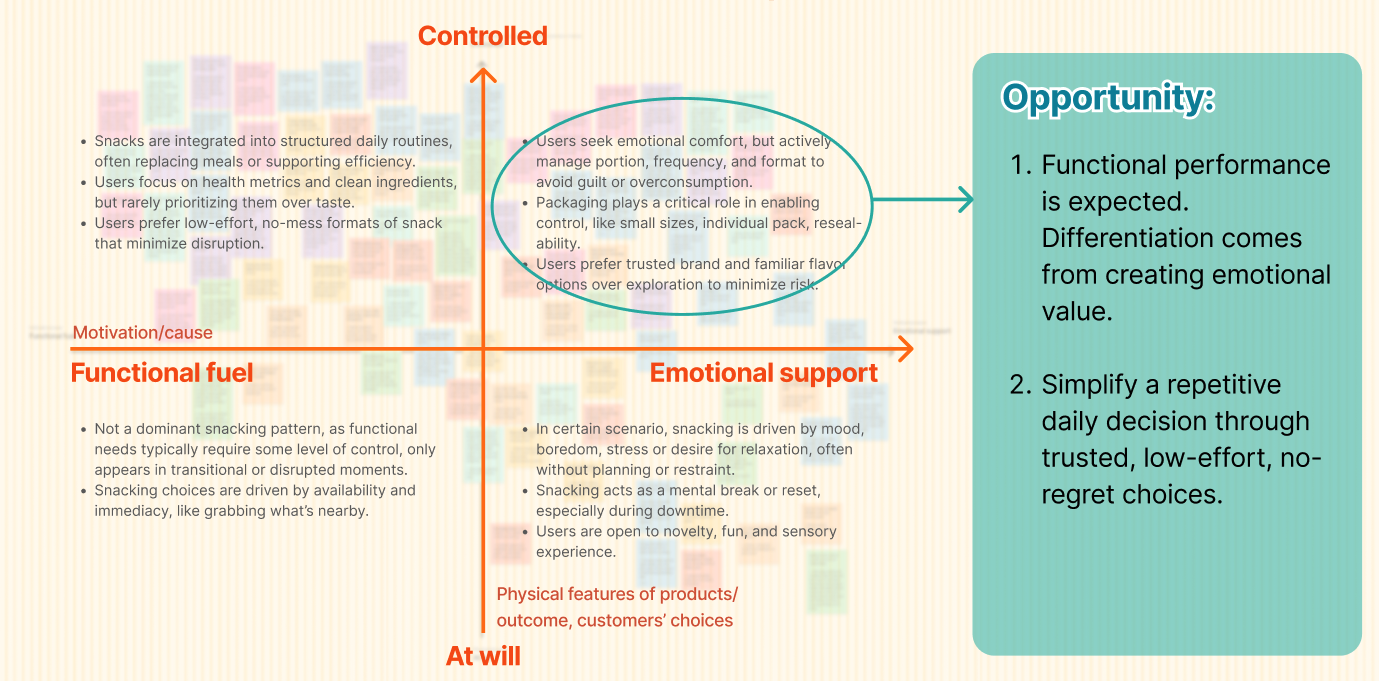
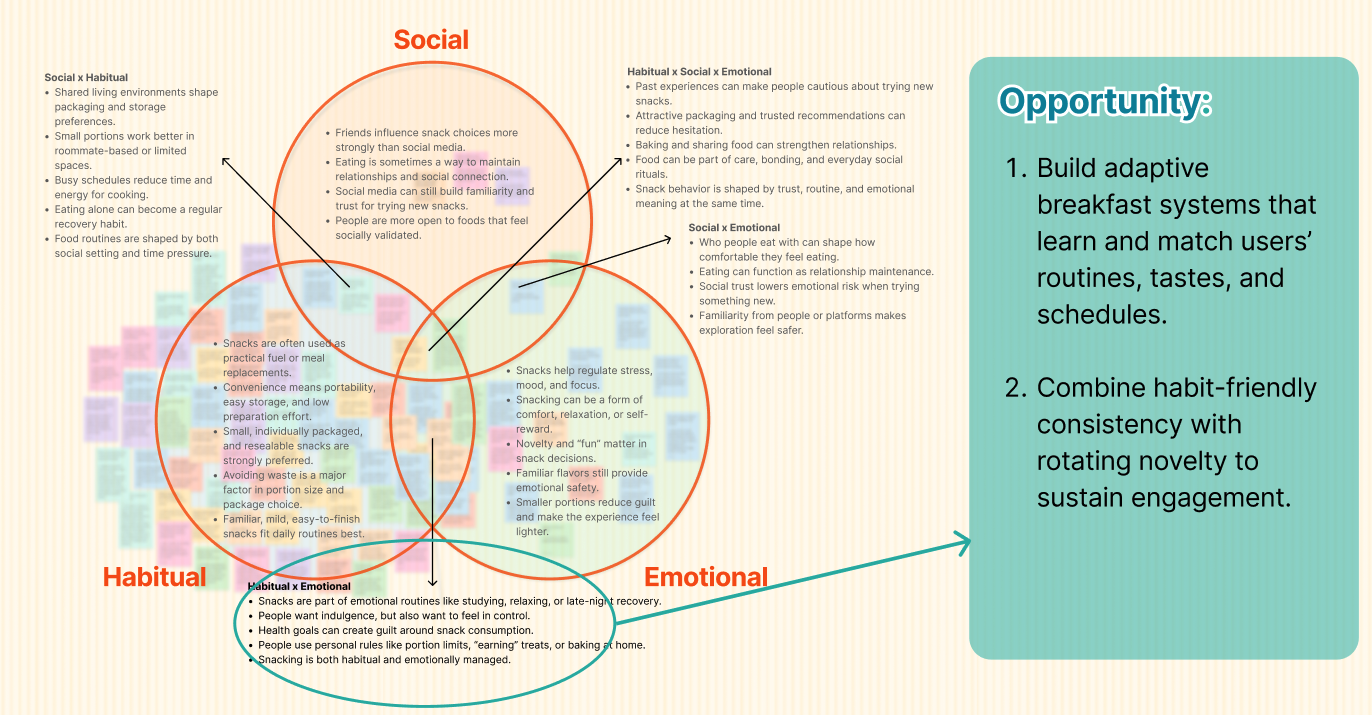
How might we design an accessible, convenient, and varied breakfast experience that fits young adults' morning routines?
05 · Ideate & Refine
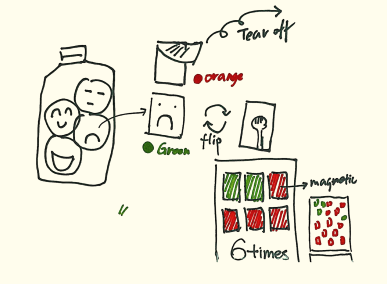
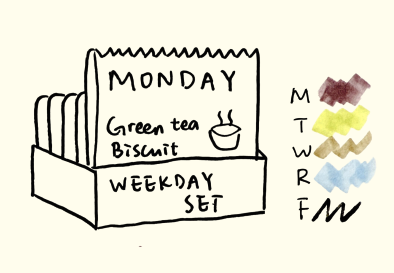
Why We Revisited the Direction
We went back to the evidence and rebuilt the idea by combining insights from secondary research with what participants shared in interviews. That synthesis shifted the concept away from expressive packaging and toward a convenient, customizable service designed for young adults' everyday routines.
Final Direction
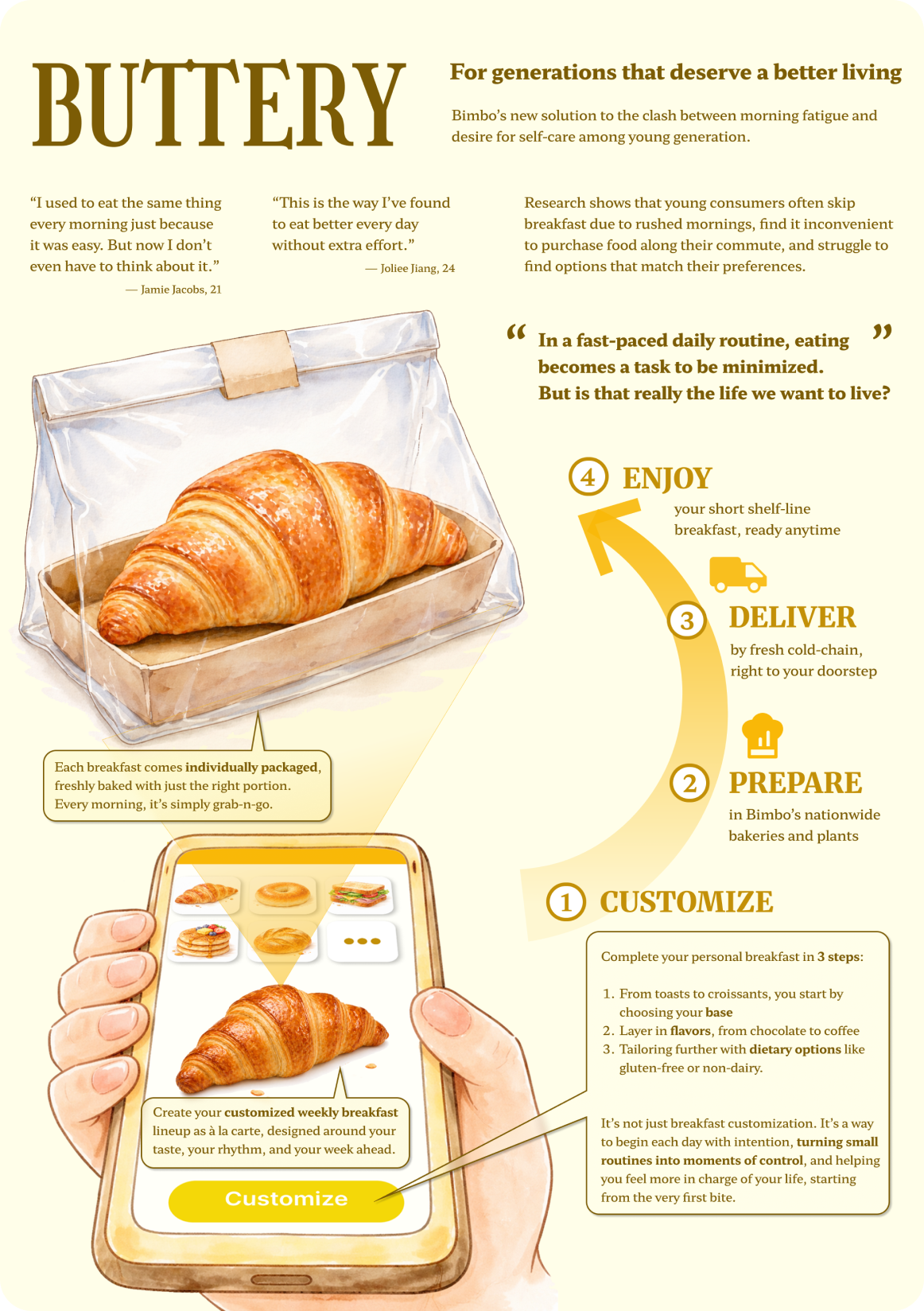
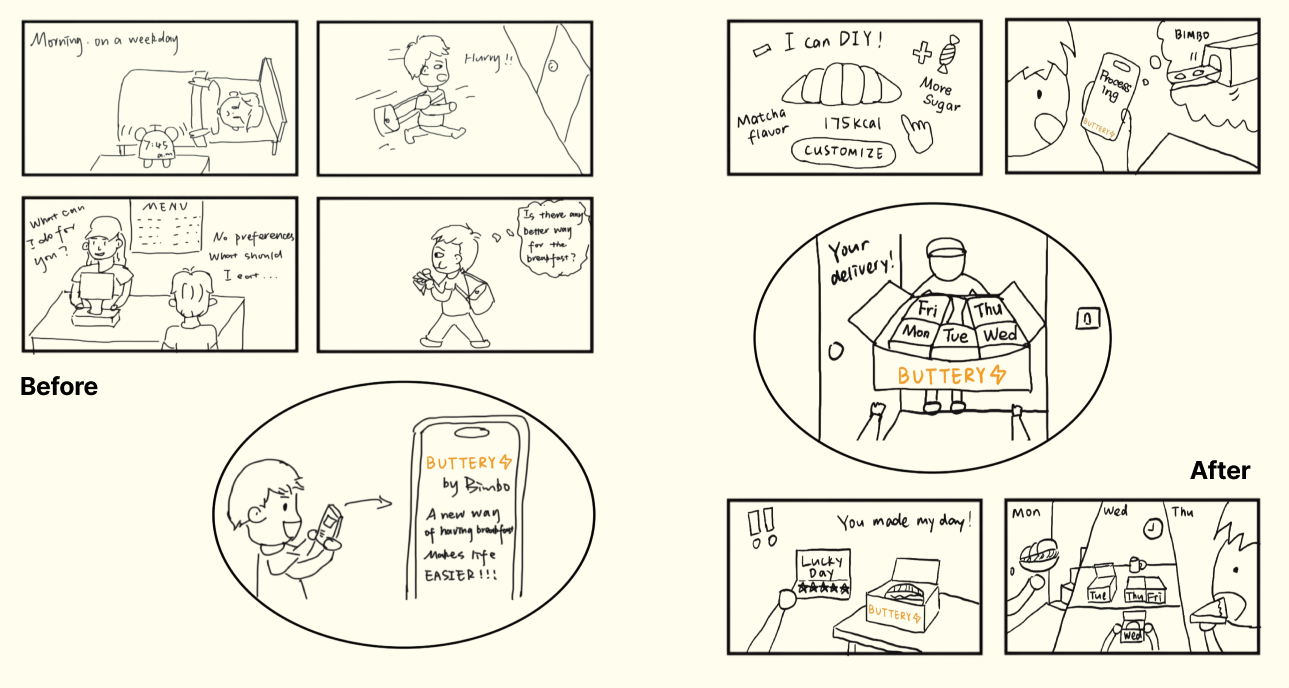
The final concept is a customizable bread subscription planned once and delivered in individually packaged, ready-to-eat portions.
Select bread type, flavor, dietary preferences, portion size, and weekly quantity.
Use scheduled weekly or biweekly delivery to remove the need for a morning stop.
Individually packaged portions fit class, work, and commuting routines.
Recommendation & open questions
Our deliverable was a concept recommendation and presentation to the client. The research supported exploring convenience, variety, and flexible portions; it did not establish that people would subscribe or that delivery would be commercially viable.
Would people choose a recurring subscription over supermarket multipacks or ordinary grocery delivery? A next study should compare these alternatives, including price and commitment.
Freshness, customization, packaging, and delivery cost need evaluation before the service can become a viable recommendation for implementation.
Nine exploratory sessions informed the concept. They do not establish demand across the full 18–35 age range or demonstrate increased purchases.
Reflection
Our early concepts emphasized expressive packaging. Returning to the research shifted the recommendation toward access, convenience, and everyday routines. That was a useful change in direction, but the subscription model still needs testing against simpler ways to buy breakfast.