Promega Instructional Design Internship · May-August 2026
Adaptive Learning Assistant
I proposed an AI-supported learning experience, scoped the build for roughly ten weeks, and developed a working prototype with fixed routing rules and a course-grounded mentor.
Problem framingScope decisionsPrototype testing
4Modules in the pilot course
~10Weeks for the prototype build
3Instructional-design colleagues in the internal pilot
Working internship prototype · Internally tested with instructional designers · No target-learner impact data
Product perspective · View learning-design perspective →
Scope decisions and constraints
A working prototype within roughly ten weeks
Use fixed tests instead of computer-adaptive testing
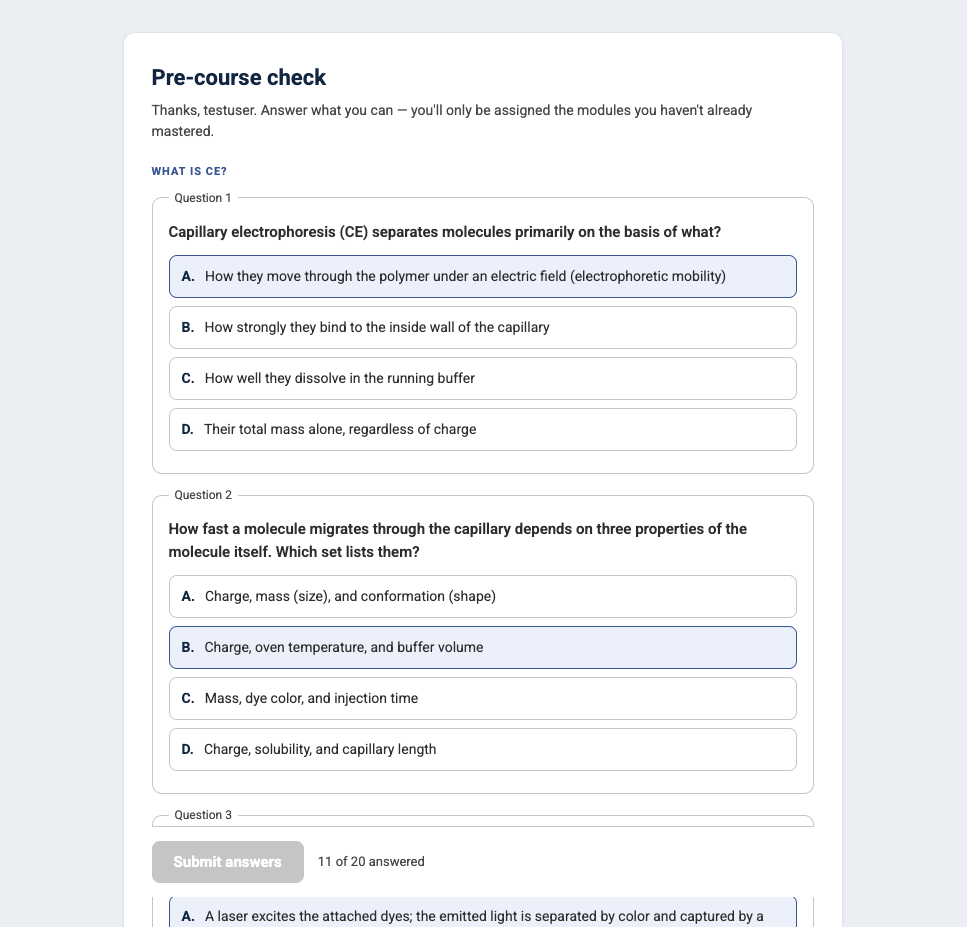
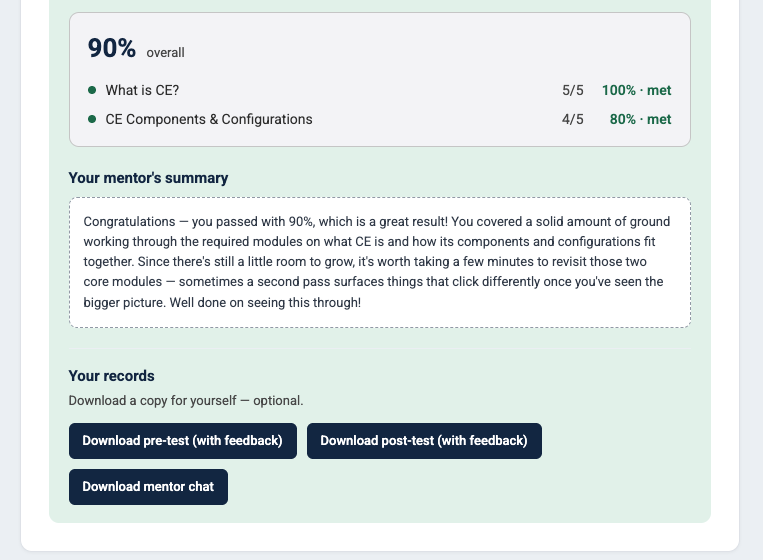
I researched computer-adaptive testing, then chose fixed pre- and post-test question sets to fit the available time. They covered the same course topics with different questions, using the team's existing 80% standard.
Keep routing decisions outside the AI
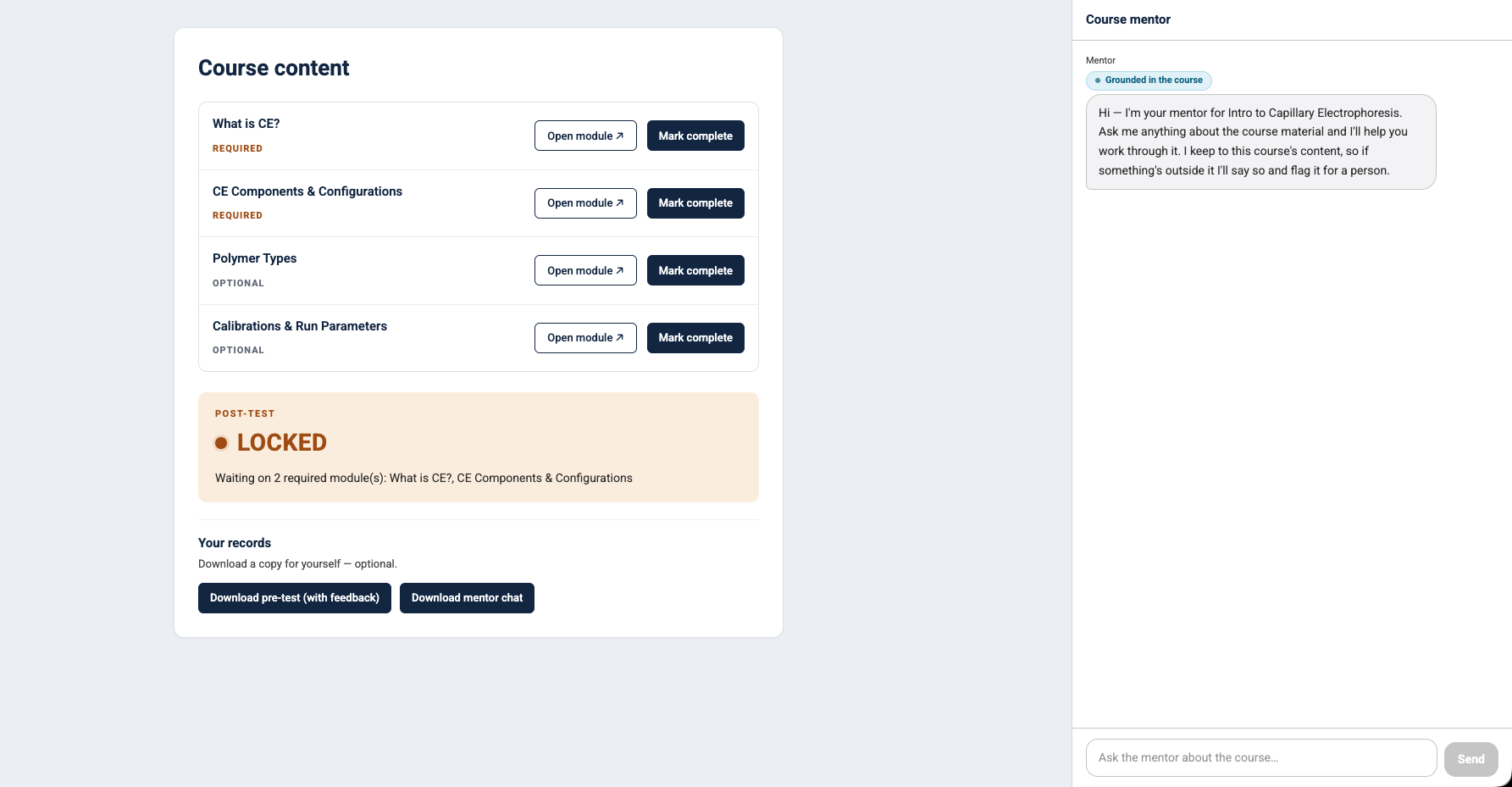
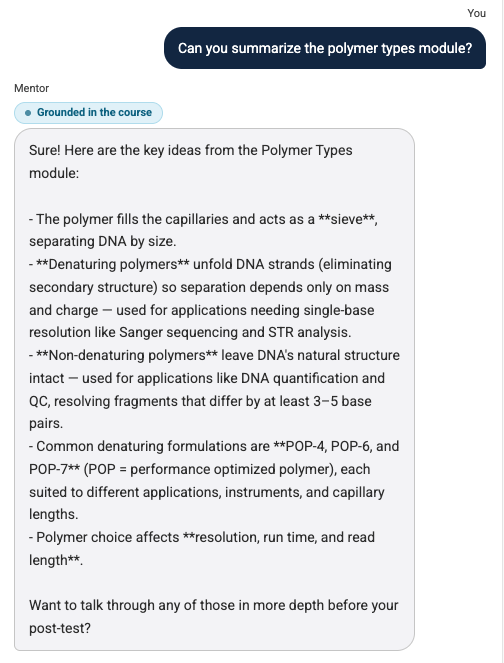
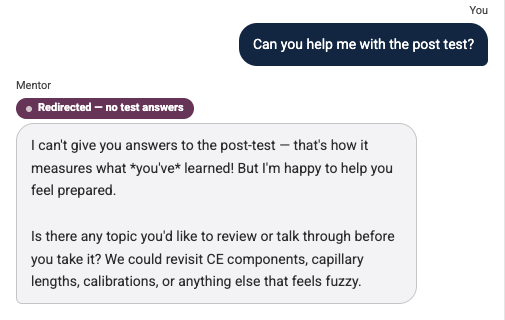
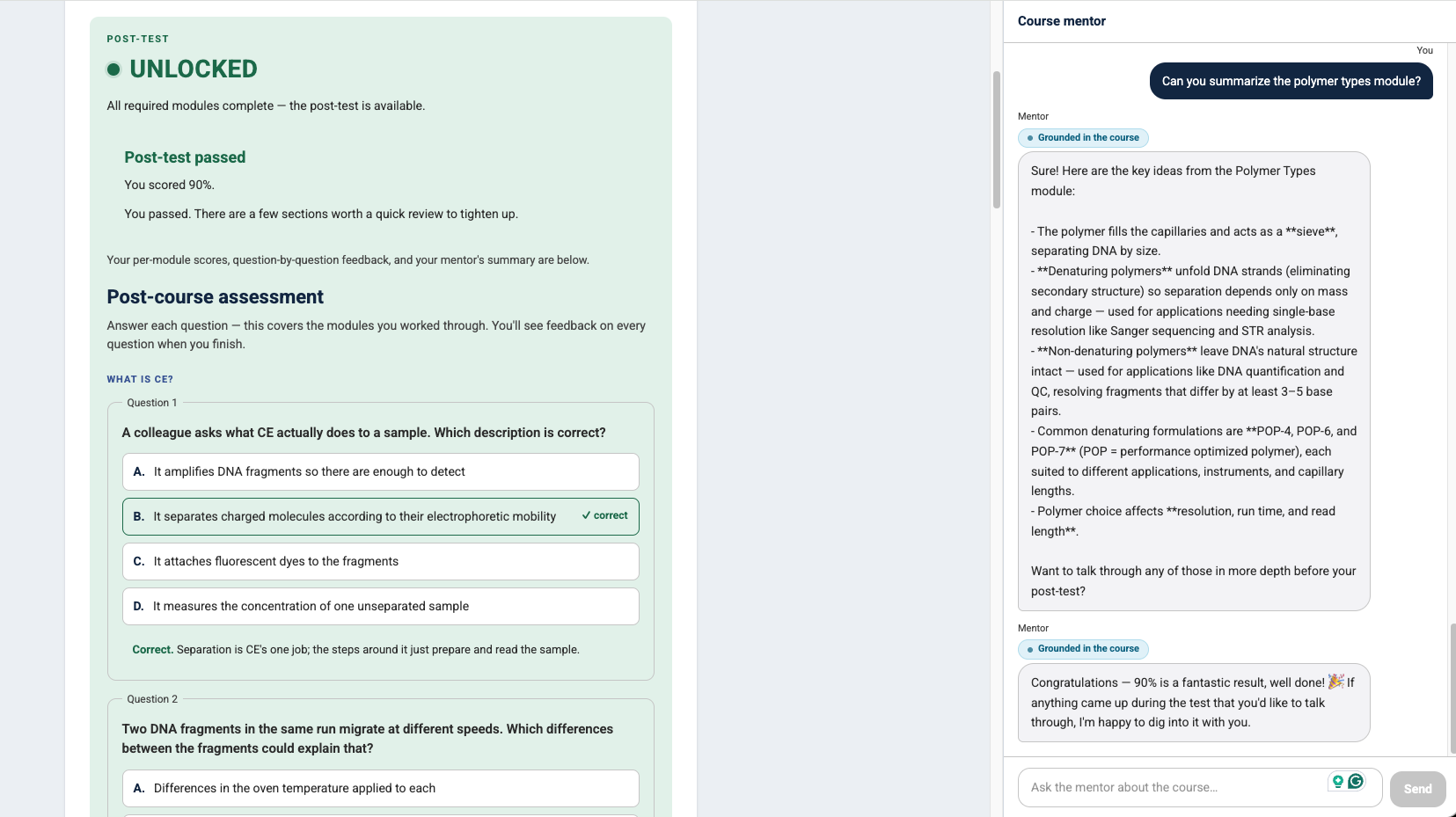
Concerns about hallucinations led me to keep scoring, module assignment, and completion in deterministic rules. The AI mentor provided explanations from SME-reviewed course summaries and refused assessment-answer requests.
Find a workable way to deliver existing content
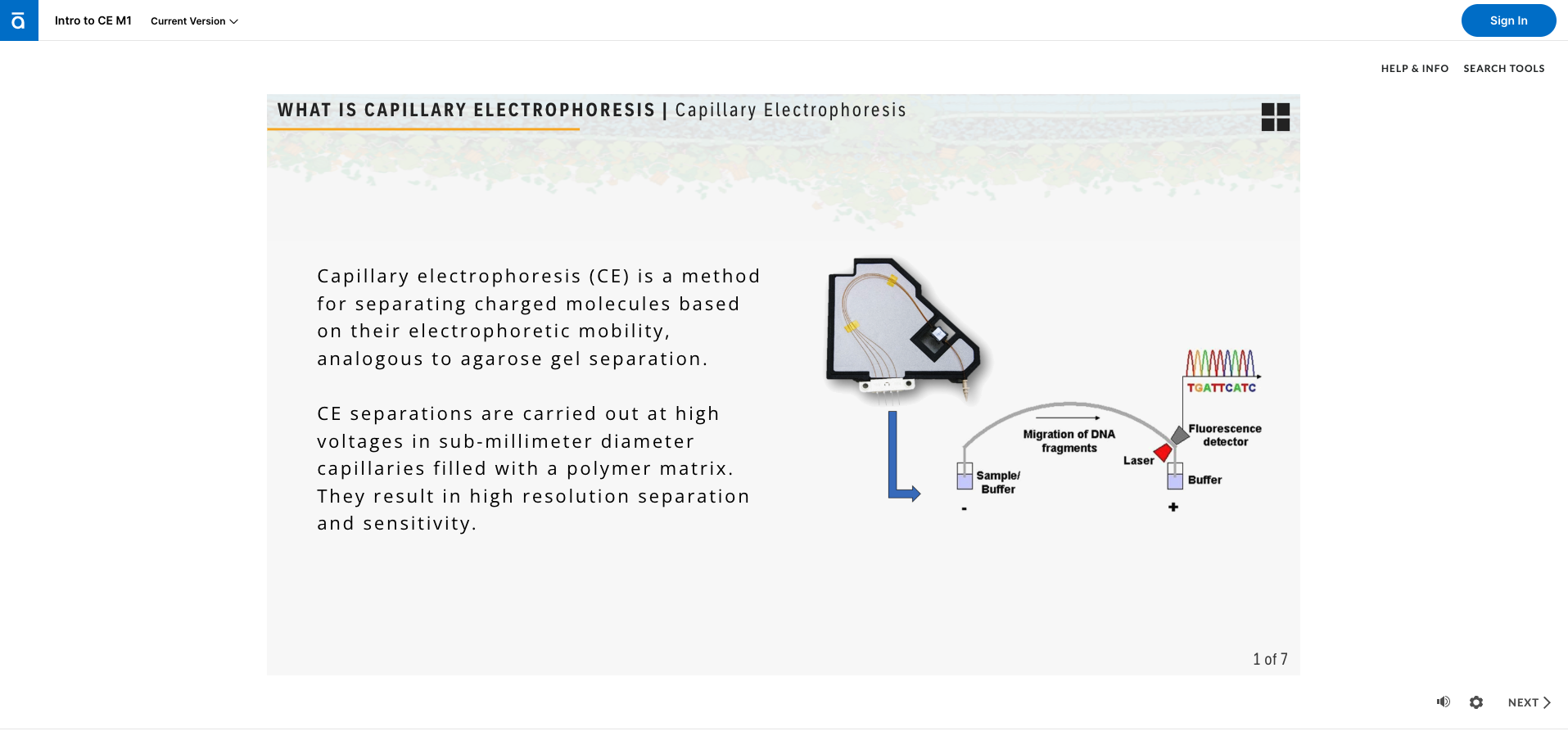
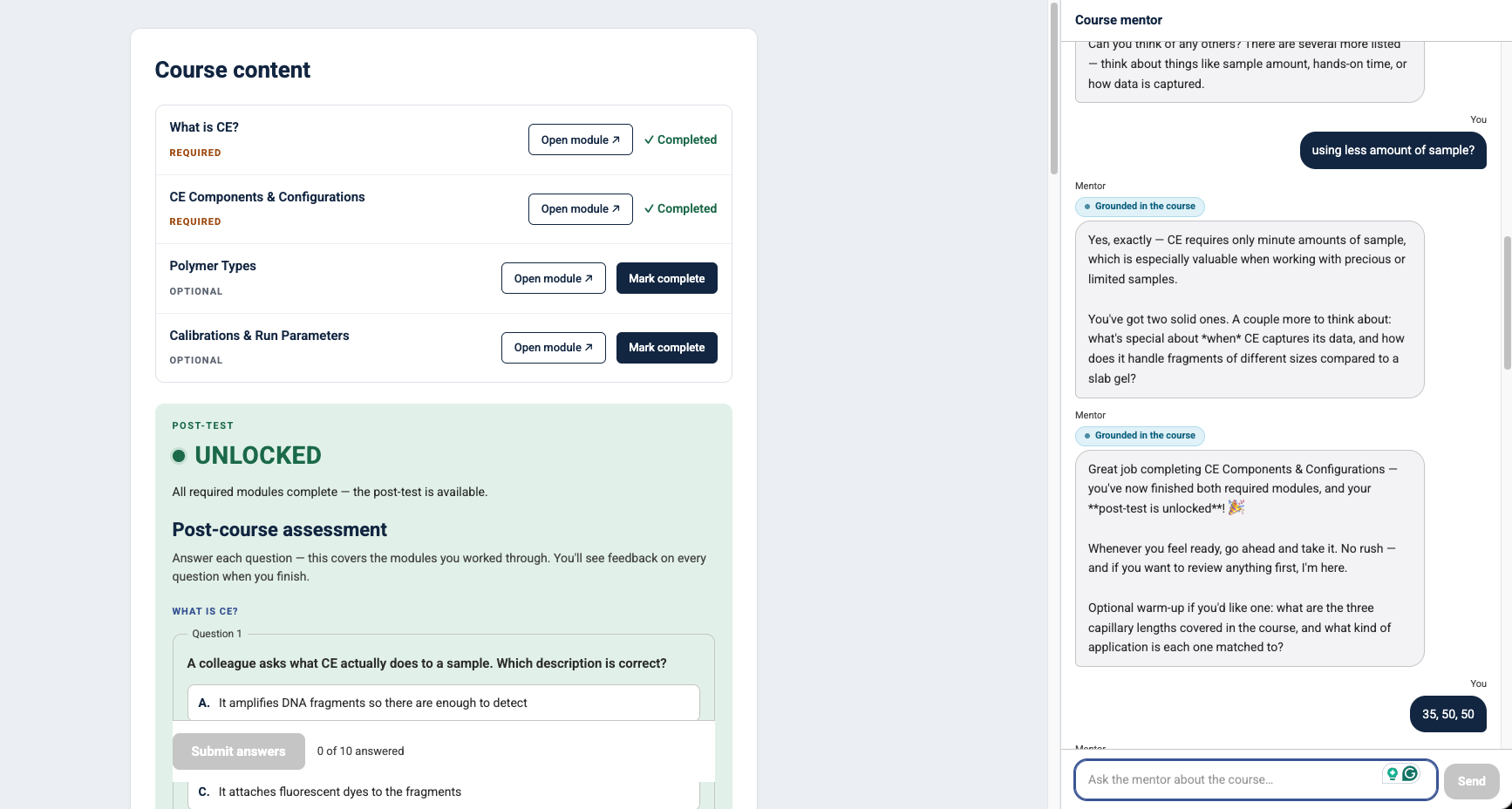
A Storyline hosting attempt through Supabase did not work. I explored alternatives with Claude and integrated an existing Rise course through Review 360. This made the course accessible, although opening it separately created friction between study and mentor support.
Record the delivery boundary
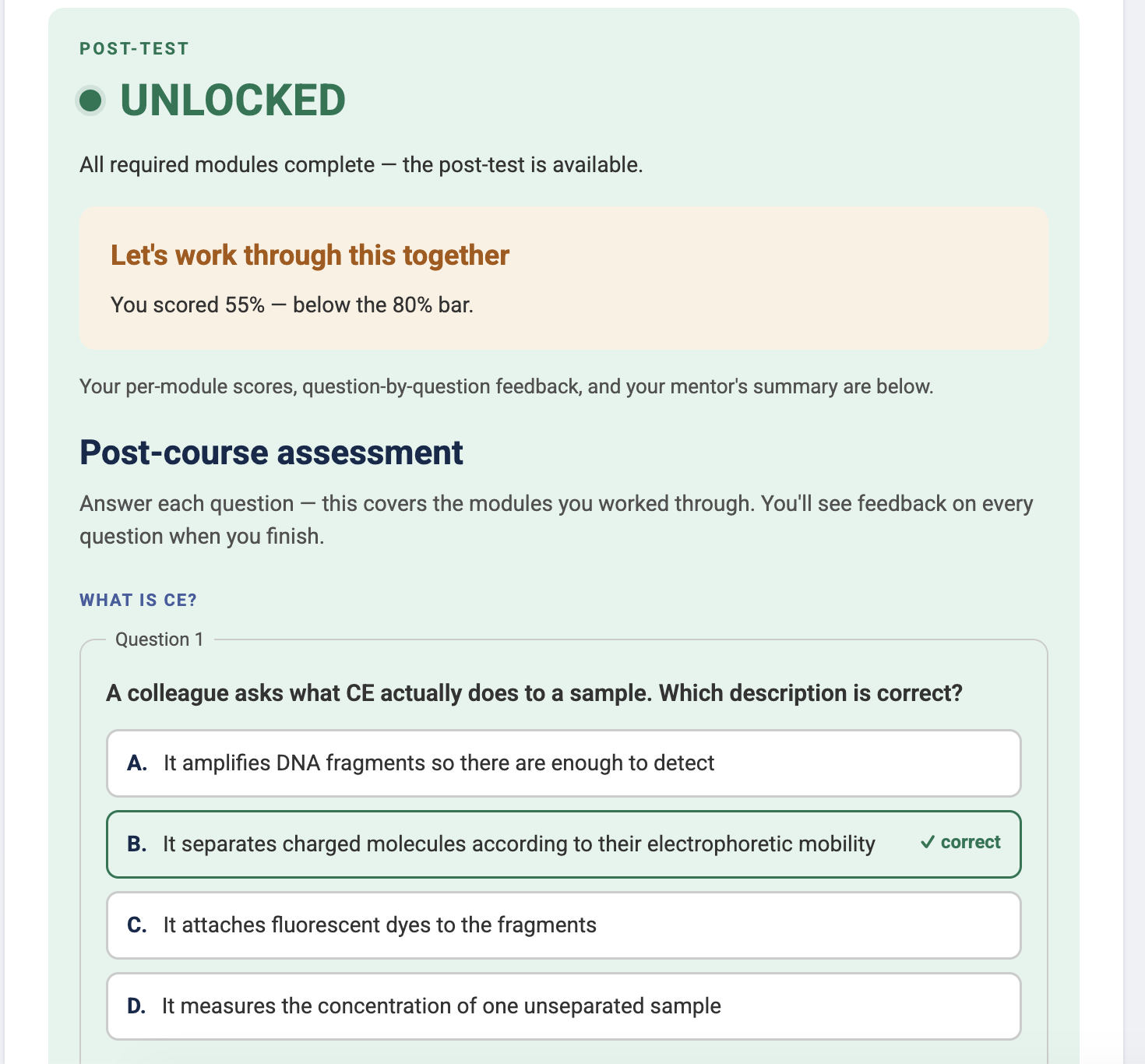
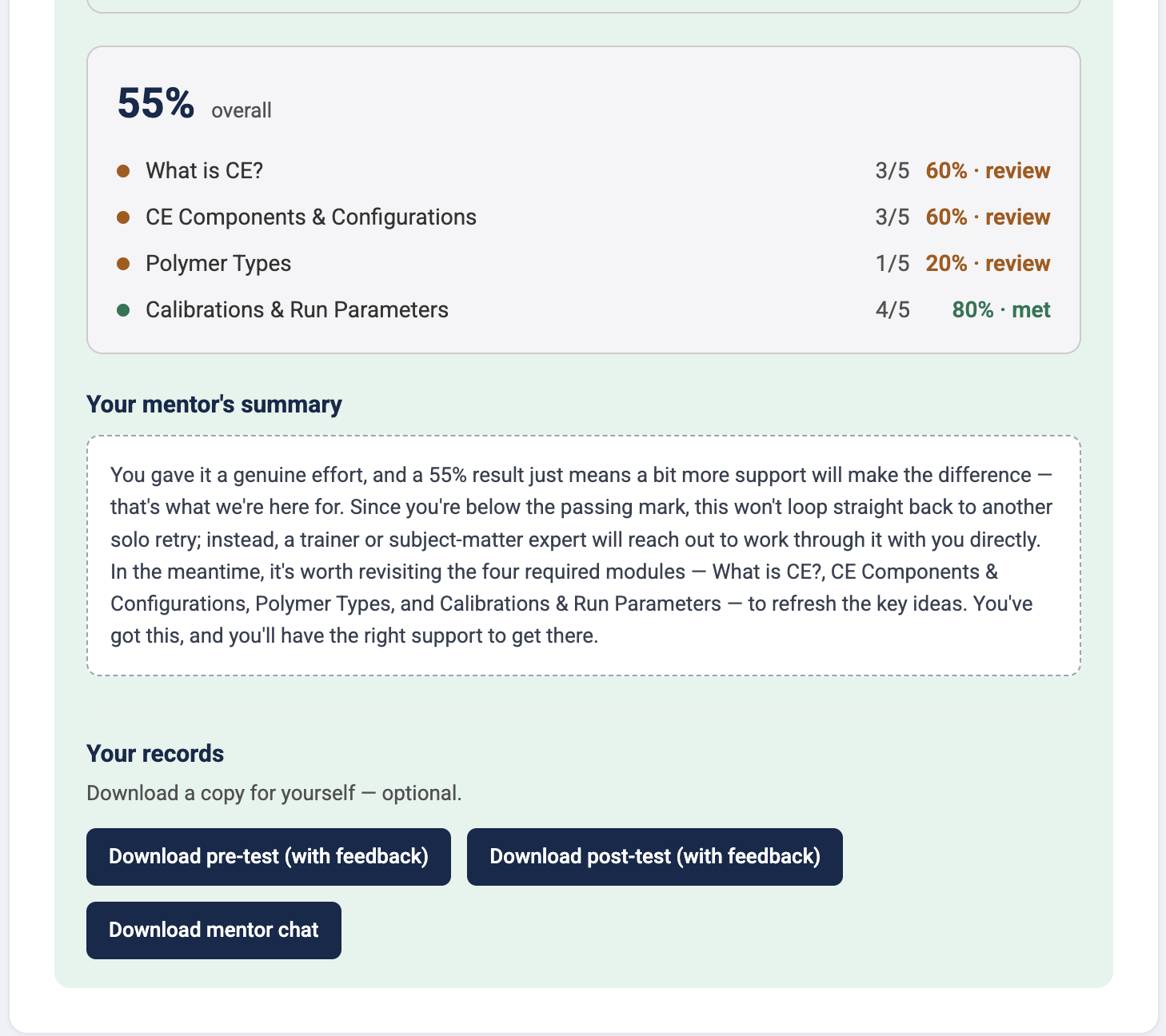
The built prototype stored profiles, scores, progress and timestamps, and displayed learner-facing summaries. Sending post-test results to a manager or SME remained planned and was not implemented.
Learning Technology
Two systems shared one learner profile.
The prototype paired a rules-based engine with a course-grounded AI mentor. That division let the product use generative AI where it helped learning, while keeping assessment, routing, and completion decisions explainable.
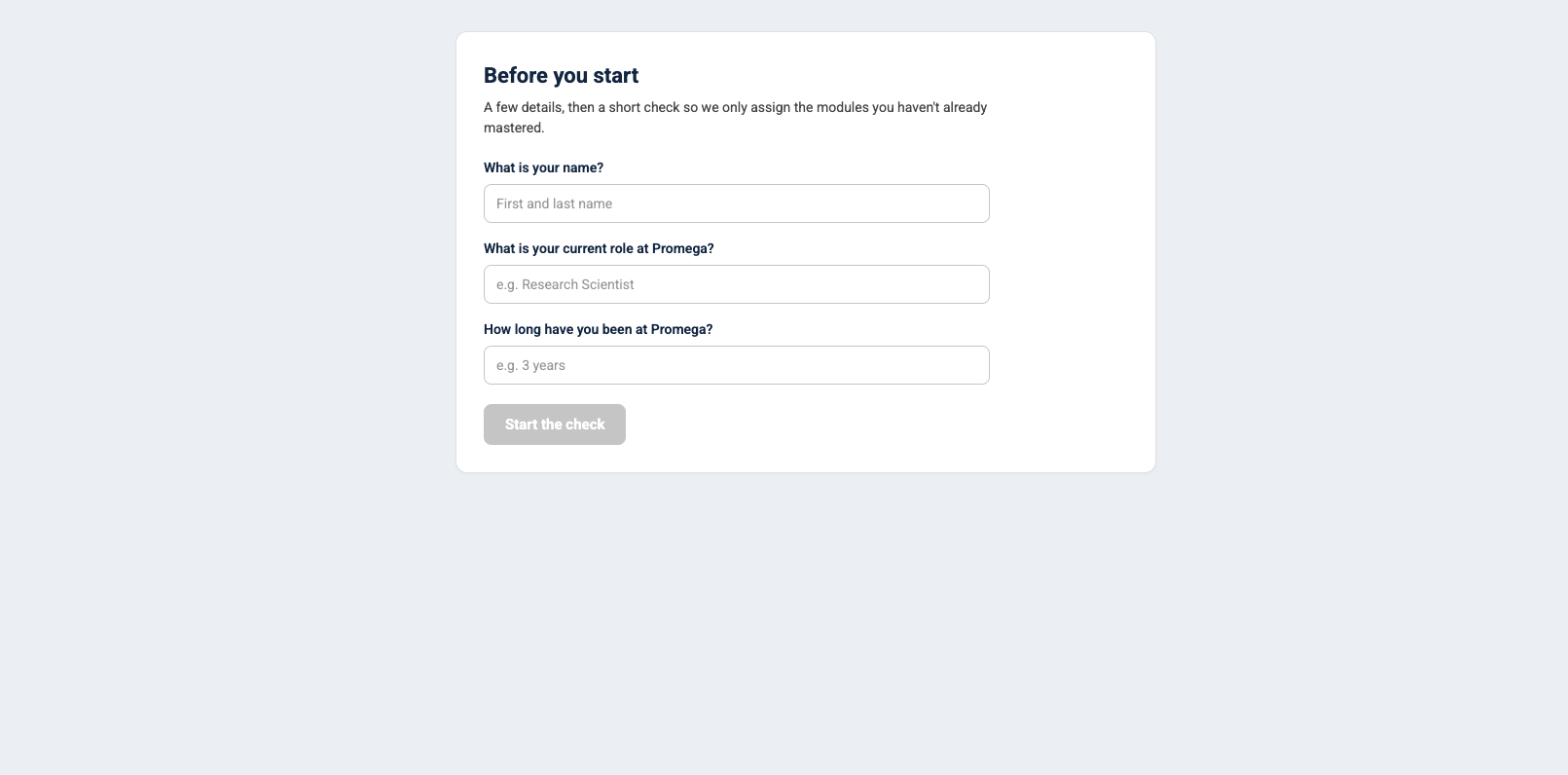
Shared Learner Profile- Learner intake: name, role, and year at Promega
- Assessment record: pre- and post-test scores
- Course state: the current module each learner is on
- Module timestamps: when learners open and complete content
Rule-Based EngineGrades assessments, routes modules, and determines completion.I designed the assessment logic and per-module mastery rules so routing decisions stayed consistent and auditable.
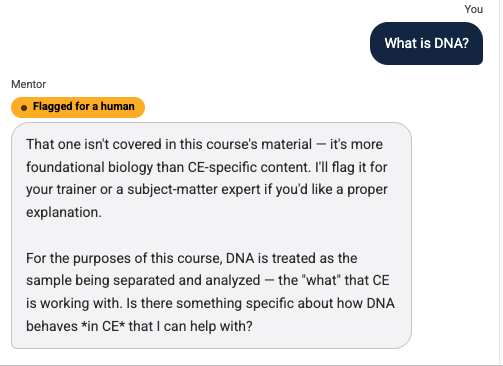
Course-Grounded AI MentorExplains concepts, coaches learners, and protects assessment answers.I used reviewed course content summaries to guide the AI, configured refusals for test-answer requests, and flagged out-of-scope questions for human support. The flag did not send a message to an expert.
Testing & Insights
Internal testing checked the workflow and surfaced design issues.
I wrote a tester guide and asked three instructional-design colleagues to try the prototype on their own computers and challenge the chatbot with difficult questions. They supplied written feedback about the workflow, answers, and usability. The core flow worked in this exploratory pilot. There was no time to implement the findings below before the internship ended.
The prototype worked end to end, including module access, learner persistence, and mentor responses.
Assessment quality needed refinement because some questions felt guessable and answer lengths sometimes hinted at the correct option.
Learners needed clearer guidance around what to do next, when they were done, and how the mentor should be used.
Internal testers encountered the intended refusal behavior, but strict refusals sometimes created friction. This pilot did not establish reliability across all possible questions.
Opening course modules outside the main app made it harder to use the mentor while studying.
Assessment design
The routing rule depends on the quality of the questions.
I consolidated a content inventory with an instructional designer using her existing Claude workflow. An SME helped identify essential knowledge. I then used Claude to produce pre- and post-test drafts covering the same topics with different questions, with five questions per module, and coordinated review by two SMEs.
Translate evidence into a path
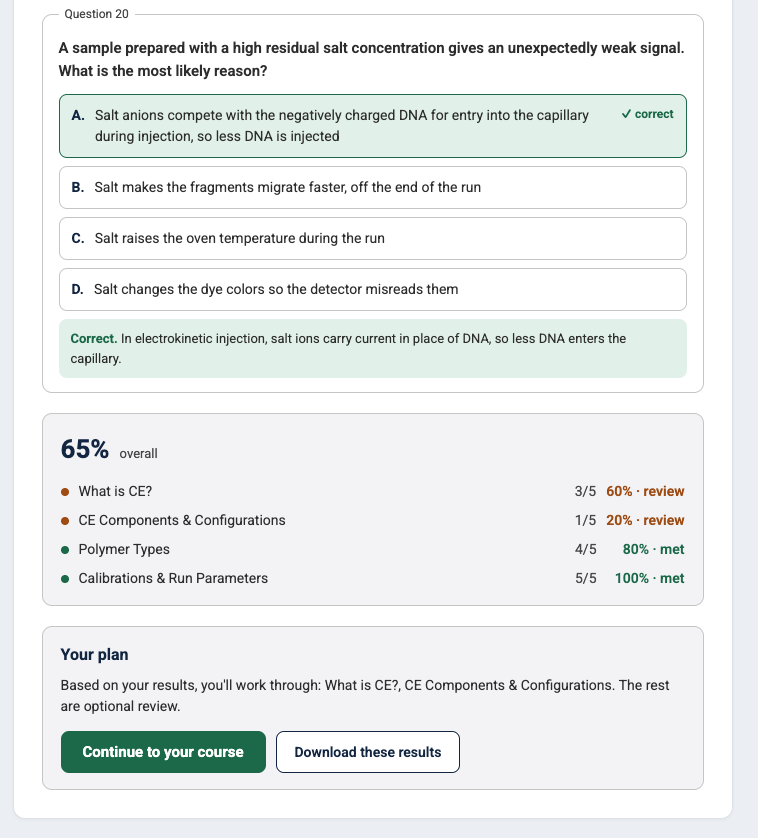
The prototype applies the team's existing 80% module threshold: four correct answers out of five make that module optional review. Lower scores assign the module as required content. The course content itself was an existing Articulate Rise course accessed through Review 360.
Recognize the limits of the rule
One answer changes a module score by 20 percentage points. Pilot feedback about guessable questions therefore matters to routing accuracy. The threshold is a prototype rule, not evidence that the assessment predicts workplace performance.
Explanatory feedback for each answer
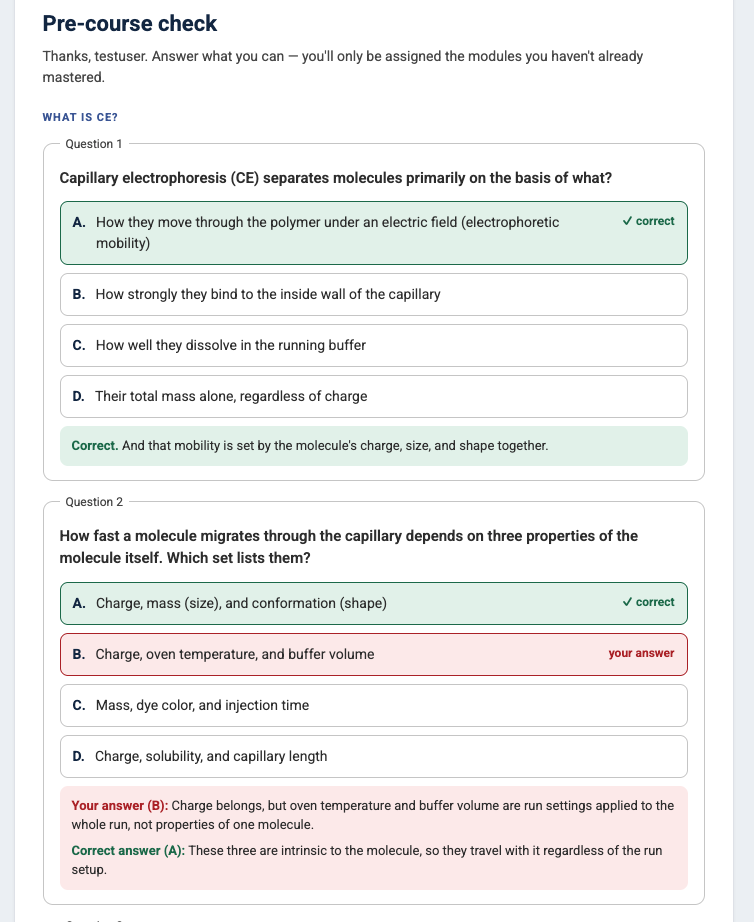
At my supervisor's suggestion, I implemented prepared feedback for each answer option. A correct choice received an explanation of why it was correct. An incorrect choice received an explanation of the mistake and the correct answer. SMEs also reviewed these explanations.
Keep review findings separate from completed revisions
Reviewers found generally credible content, but some answers were guessable because of option length or implausible distractors. Review arrived late in the project, and those suggested assessment revisions were not implemented before the internship ended.
Learning Design
Assess first, route deliberately, support on demand.
Assessment results determine the path. The AI mentor supports explanations without deciding which modules a learner can skip.
- Assess prior knowledgePre-test results are recorded by module.
- Assign a learning pathFixed rules mark modules required or optional.
- Practice with supportExisting course content and the AI mentor support study.
- Review the post-testLearners see scores, explanations, and review guidance.
Automatic delivery of results to a manager or SME remained planned. The prototype did not implement that handoff.