An AI-assisted learning prototype that lets adult learners test out of content they already know, focus on remaining gaps, and get course-grounded support from an AI mentor.
AI product designWeb applicationLearning technology
4
Modules in the pilot course
80%
Accuracy required to test out of a module
3
AI response tags: course-grounded, test-related, and human handoff
Working internship prototype · Internally tested with instructional designers · No target-learner impact data
My Role
Initiated the Adaptive Learning Assistant concept during the internship
Led the 0-to-1 product design and prototype build
Designed the adaptive learning flow, assessment logic, and mastery gate
Built the frontend in Lovable and backend in Supabase
Integrated Claude through a secure proxy with course-content guardrails
Created the tester guide and synthesized internal pilot feedback
Collaborated with the manager and subject-matter expert (SME) to review assessment questions and course content summaries for credibility and accuracy
Presented the prototype and product direction to Promega employees at the intern showcase
Pain Point
Long fixed learning paths do not fit busy adult learners.
Promega's Scientific and Sales Training Services (SSTS) team supports global employees and distributor teams with product and sales training. Learners often have crowded schedules, so a one-size path can ask them to repeat content they already understand. The product opportunity was to make training more efficient without weakening confidence in mastery.
Product Strategy
Assess first, route deliberately, support on demand.
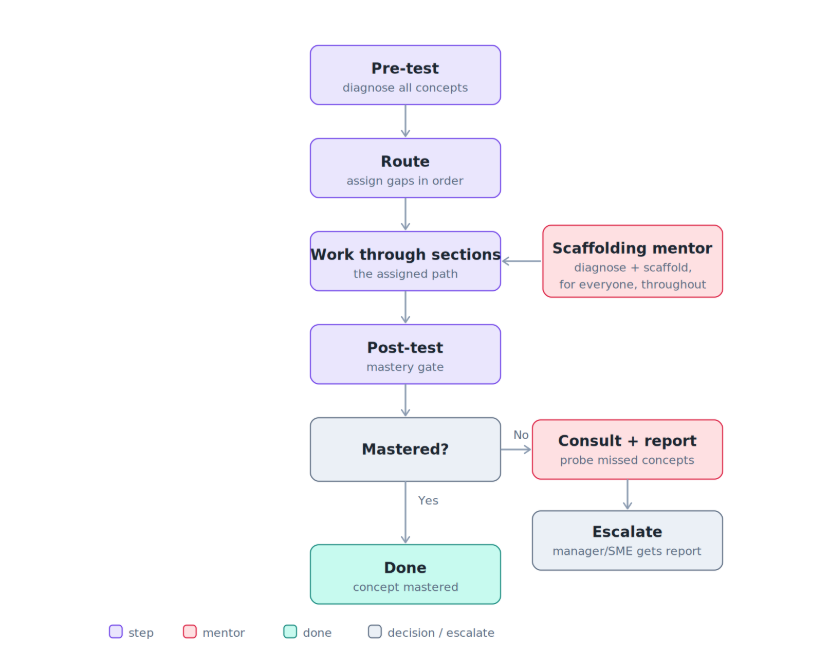
Assessment results determine the path. The AI mentor supports explanations without deciding which modules a learner can skip.
System Design
Two systems shared one learner profile.
The prototype paired a rules-based engine with a course-grounded AI mentor. That division let the product use generative AI where it helped learning, while keeping assessment, routing, and completion decisions explainable.
Shared Learner Profile
Learner intake: name, role, and year at Promega
Assessment record: pre- and post-test scores
Course state: the current module each learner is on
Module timestamps: when learners open and complete content
Rule-Based EngineGrades assessments, routes modules, and determines completion.
I designed the assessment logic and per-module mastery rules so routing decisions stayed consistent and auditable.
Course-Grounded AI MentorExplains concepts, coaches learners, and protects assessment answers.
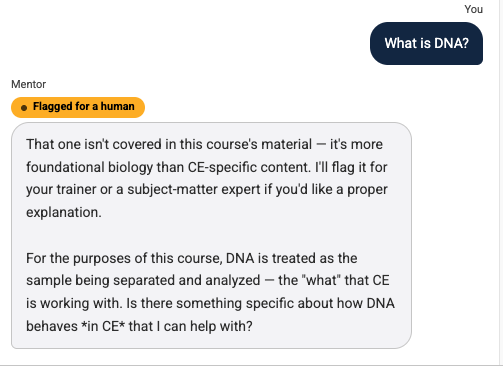
I used reviewed course content summaries to guide the AI, blocked requests for test answers, and directed out-of-scope questions to a human expert.
Assessment design
The routing rule depends on the quality of the questions.
I developed an assessment blueprint with five questions per module, parallel pre- and post-tests, and question-level feedback. Instructional designers and an SME reviewed the questions and course summaries.
Translate evidence into a path
The prototype uses an 80% module threshold: four correct answers out of five make that module optional review. Lower scores assign the module as required content. The course content itself was existing Promega material delivered through Review 360.
Recognize the limits of the rule
One answer changes a module score by 20 percentage points. Pilot feedback about guessable questions therefore matters to routing accuracy. The threshold is a prototype rule, not evidence that the assessment predicts workplace performance.
Prototype Walkthrough
How the product decisions appear to learners
These screens show the learner journey from intake to course completion and how each product decision appeared in the web application.
Learner setup and diagnostic screens
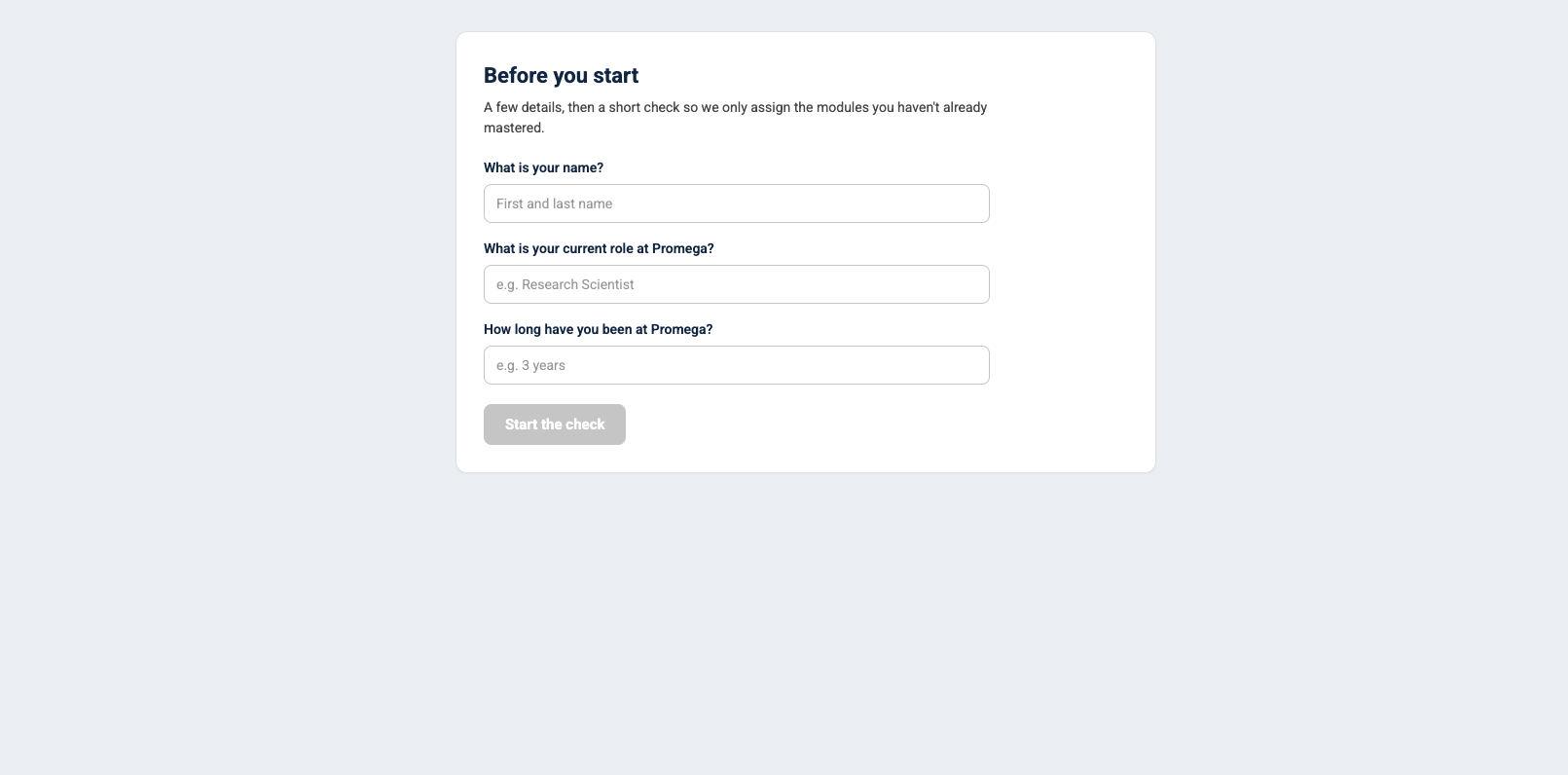
01
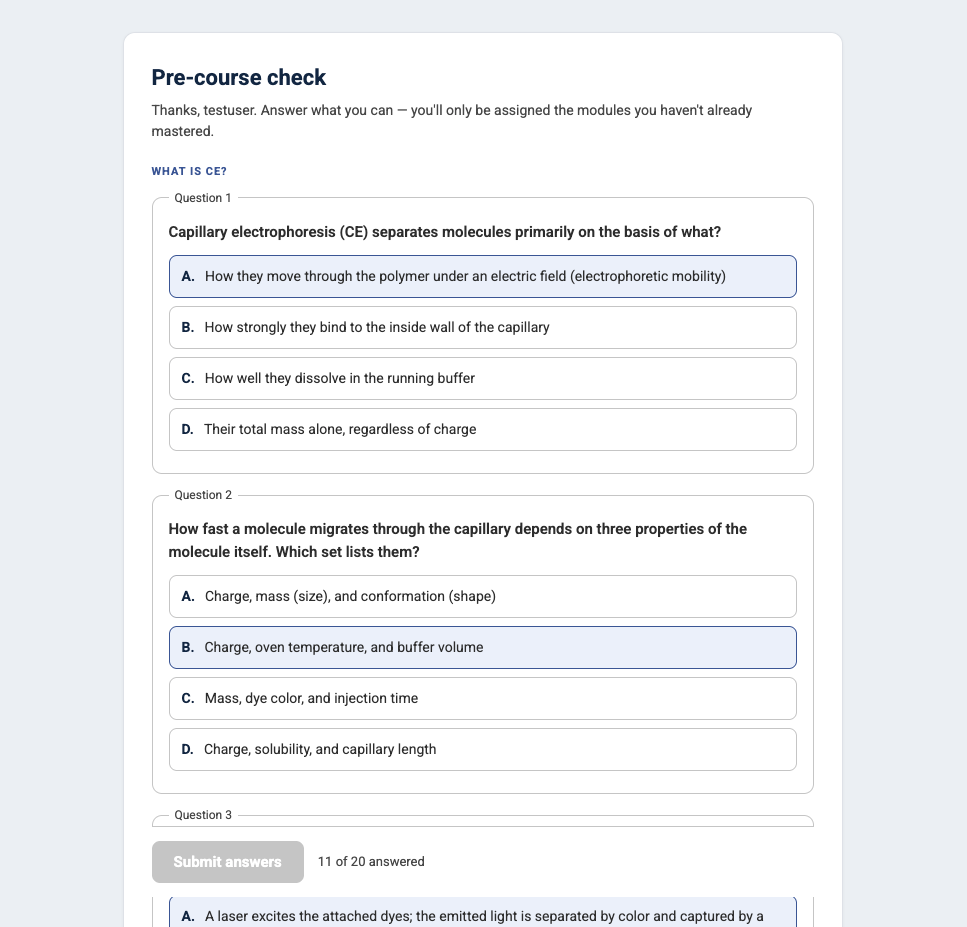
Create a profile and diagnose prior knowledge
Learners enter their name, role, and years at Promega to log in and access the course. Their progress is saved so they can return later after logging in again. The pre-course check then identifies what they already know.
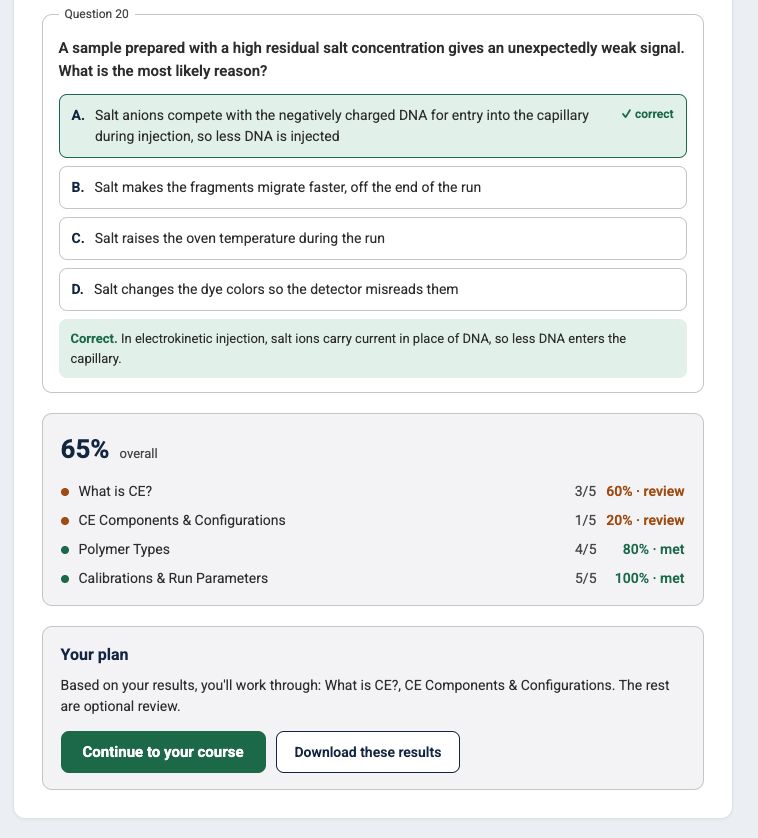
Learner intake creates the profile used throughout the experience.The diagnostic maps 20 questions to four course modules.
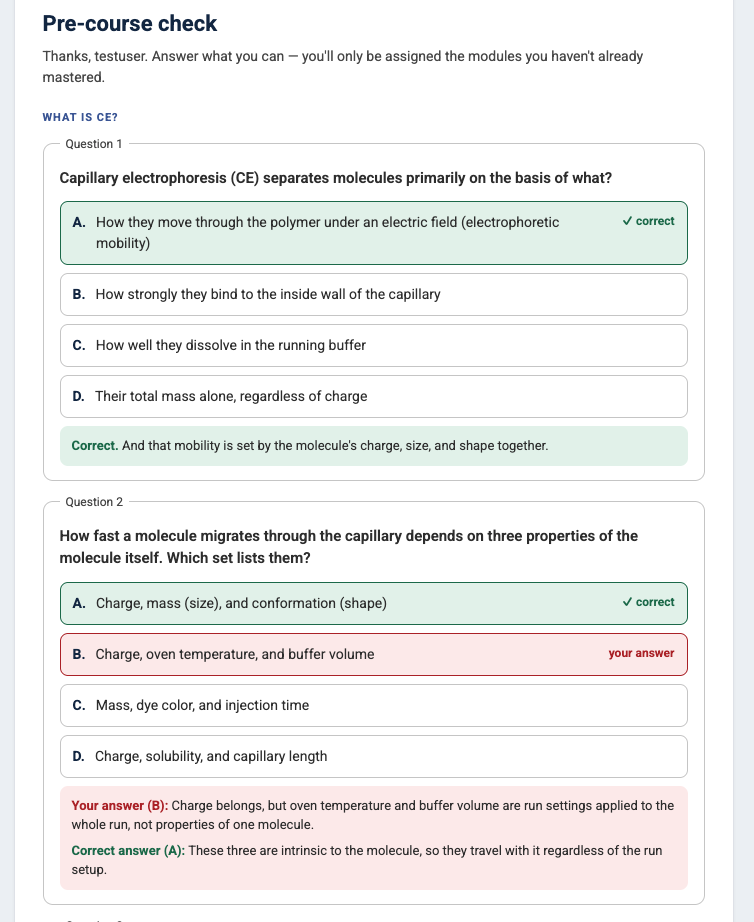
02
Turn assessment evidence into a learning plan
Immediate answer feedback supports transparency, while module-level scores determine which content is required and which becomes optional review.
Question-level feedback explains both correct and incorrect responses.This summary at the end of the pre-test shows the accuracy score for each module. The 80% mastery rule then converts those results into required and optional modules.
03
Focus learning on identified gaps
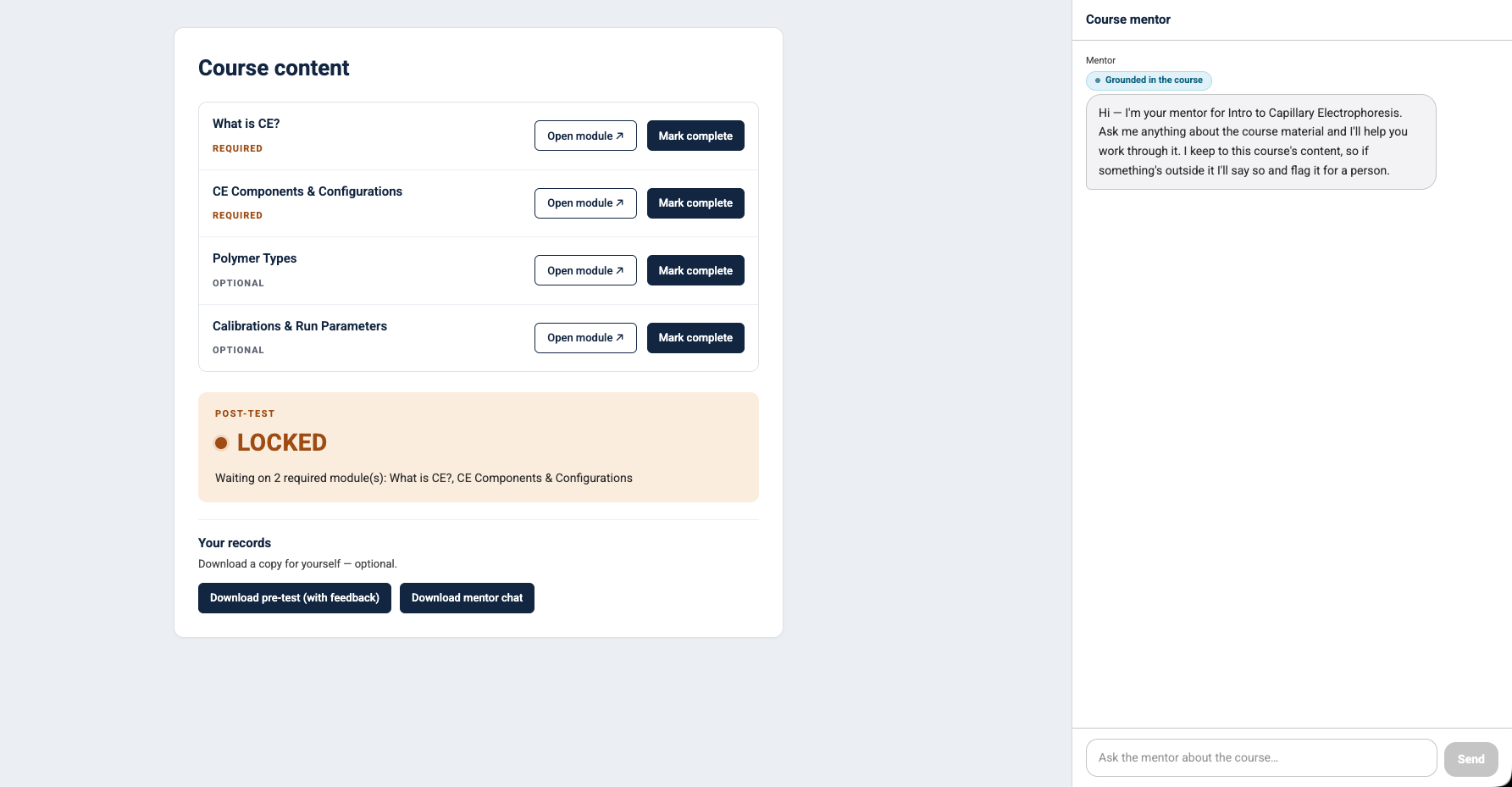
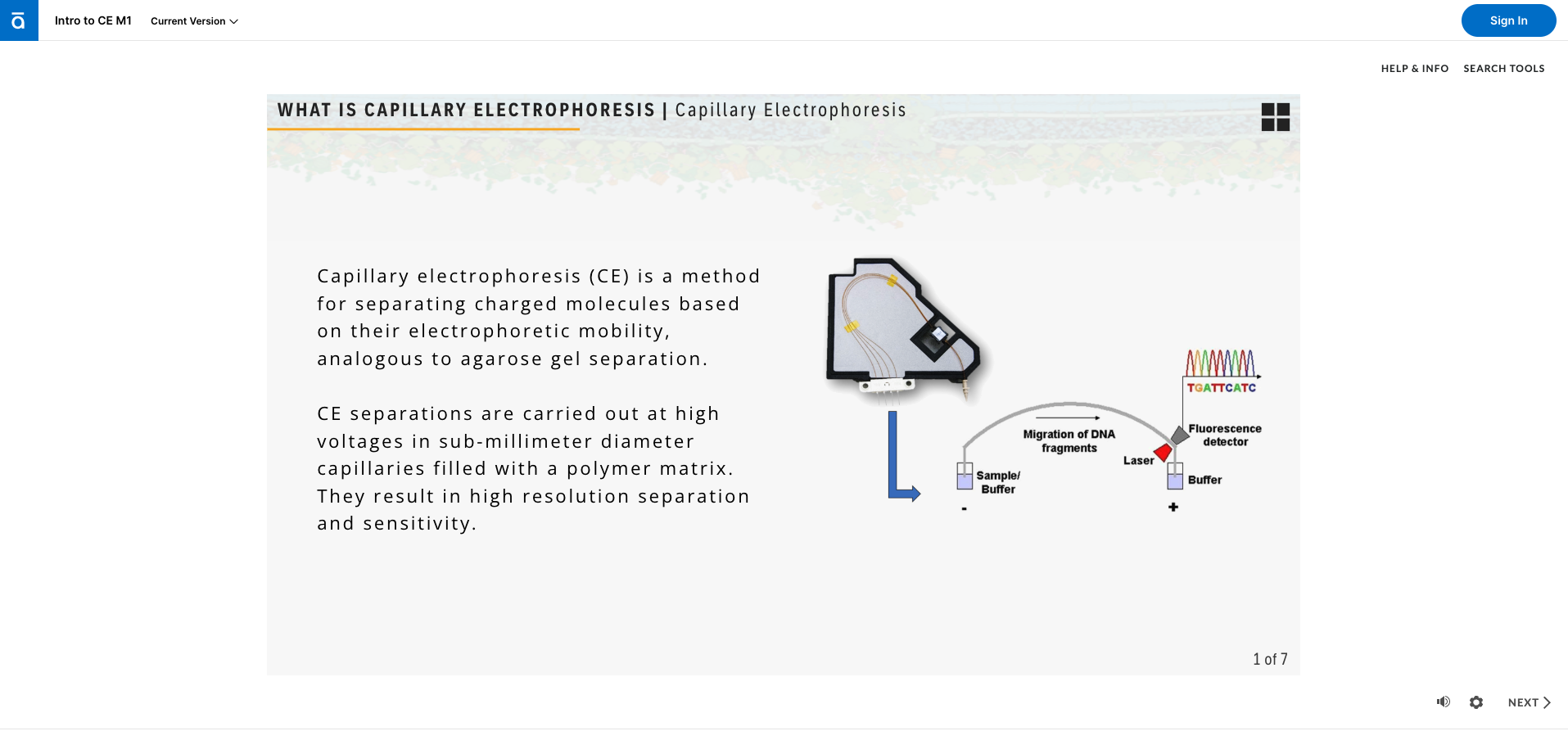
The course panel keeps required modules, progress, records, and mentor support together. Course content is delivered through an embedded Review 360 experience.
The main workspace makes the assigned path and post-test requirements visible.The existing Promega course became the learning content inside the adaptive path.
04
Make AI behavior visible and accountable
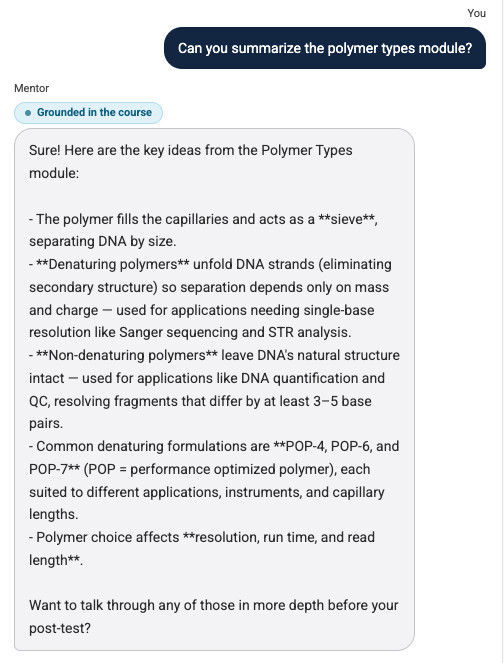
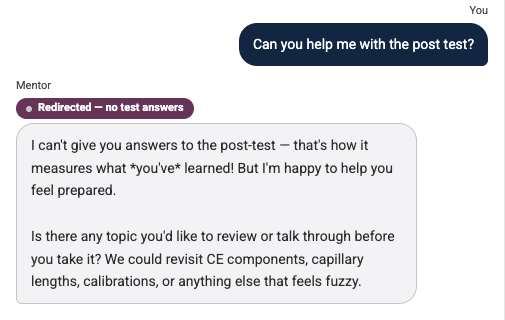
Every mentor response is labeled so learners can see whether it is grounded in the course, redirected away from test answers, or flagged for human support.
Course-grounded explanation.Assessment-answer protection.Human escalation for out-of-scope questions.
Post-test access after required modules
05
Gate the post-test by required work
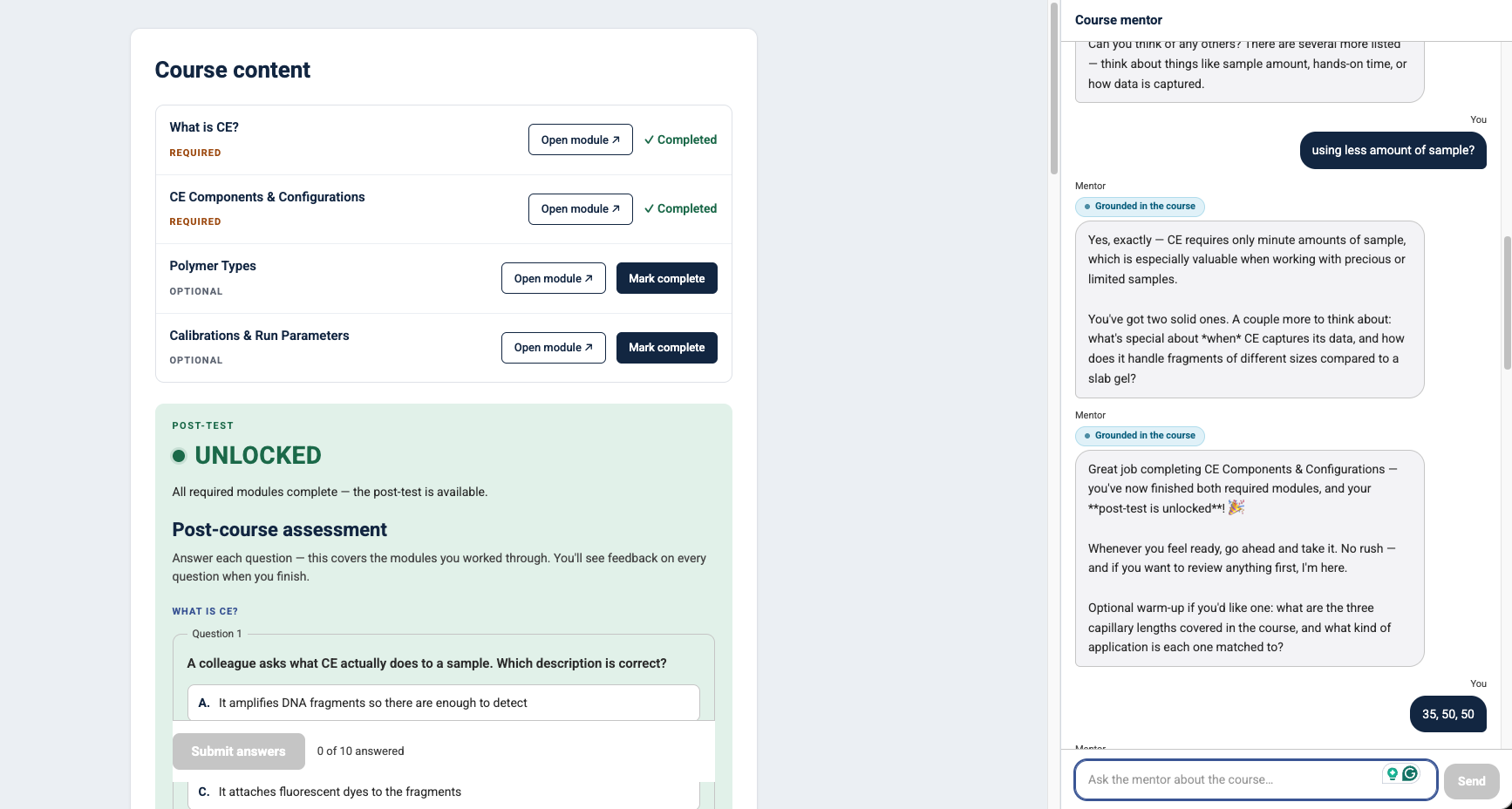
The system unlocks the post-test only after all assigned modules are complete. The mentor recognizes the learner's progress and remains available for review.
Completion state, post-test access, and mentor context stay synchronized.
06
Respond to both post-test outcomes
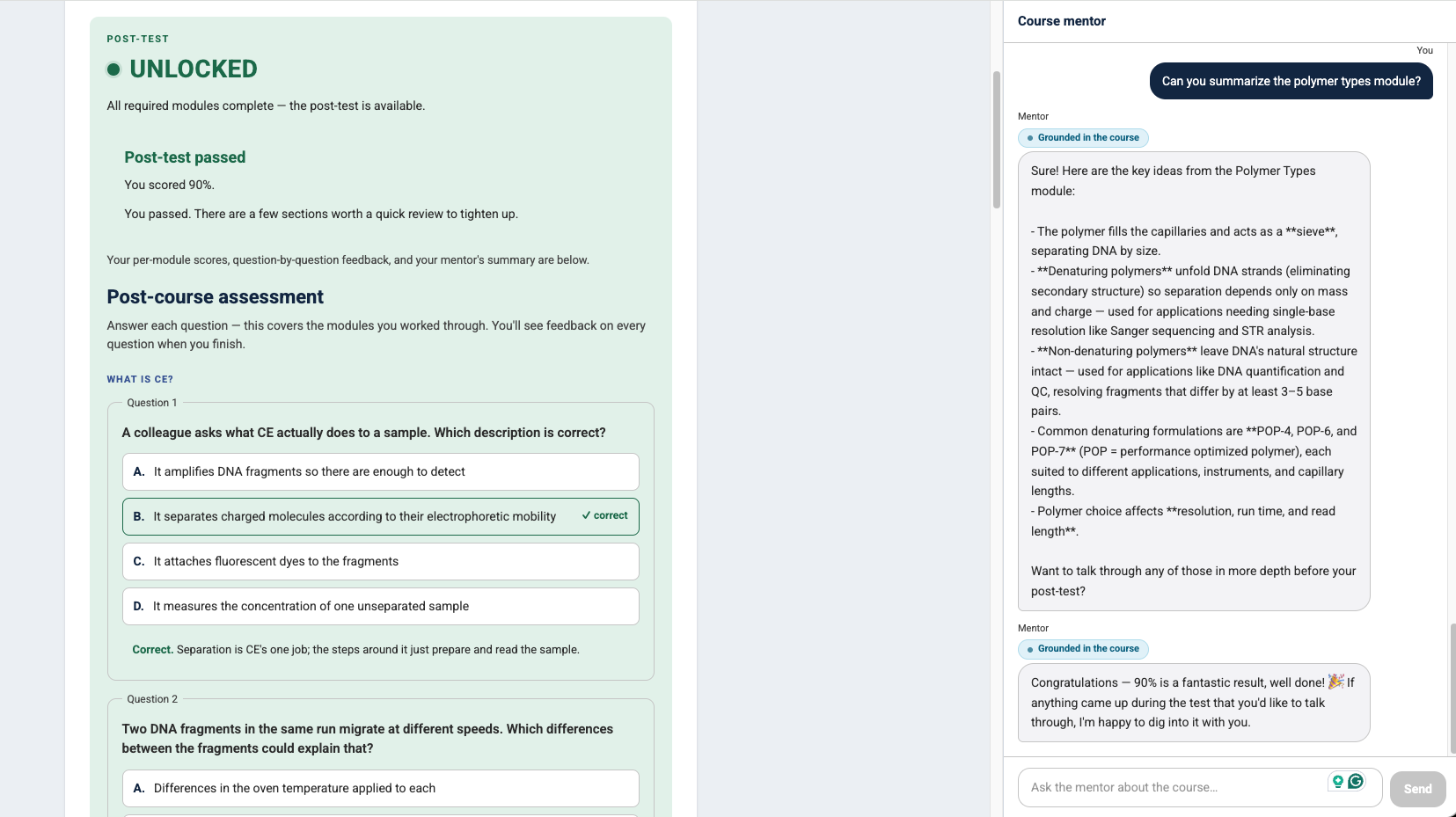
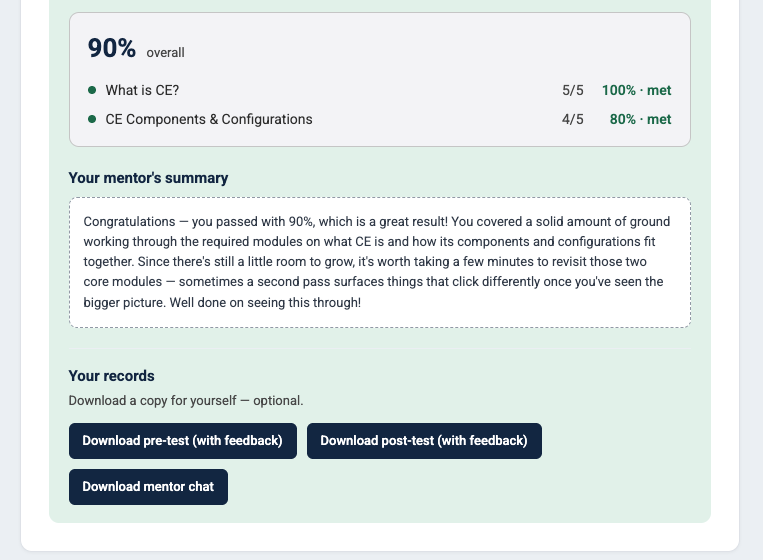
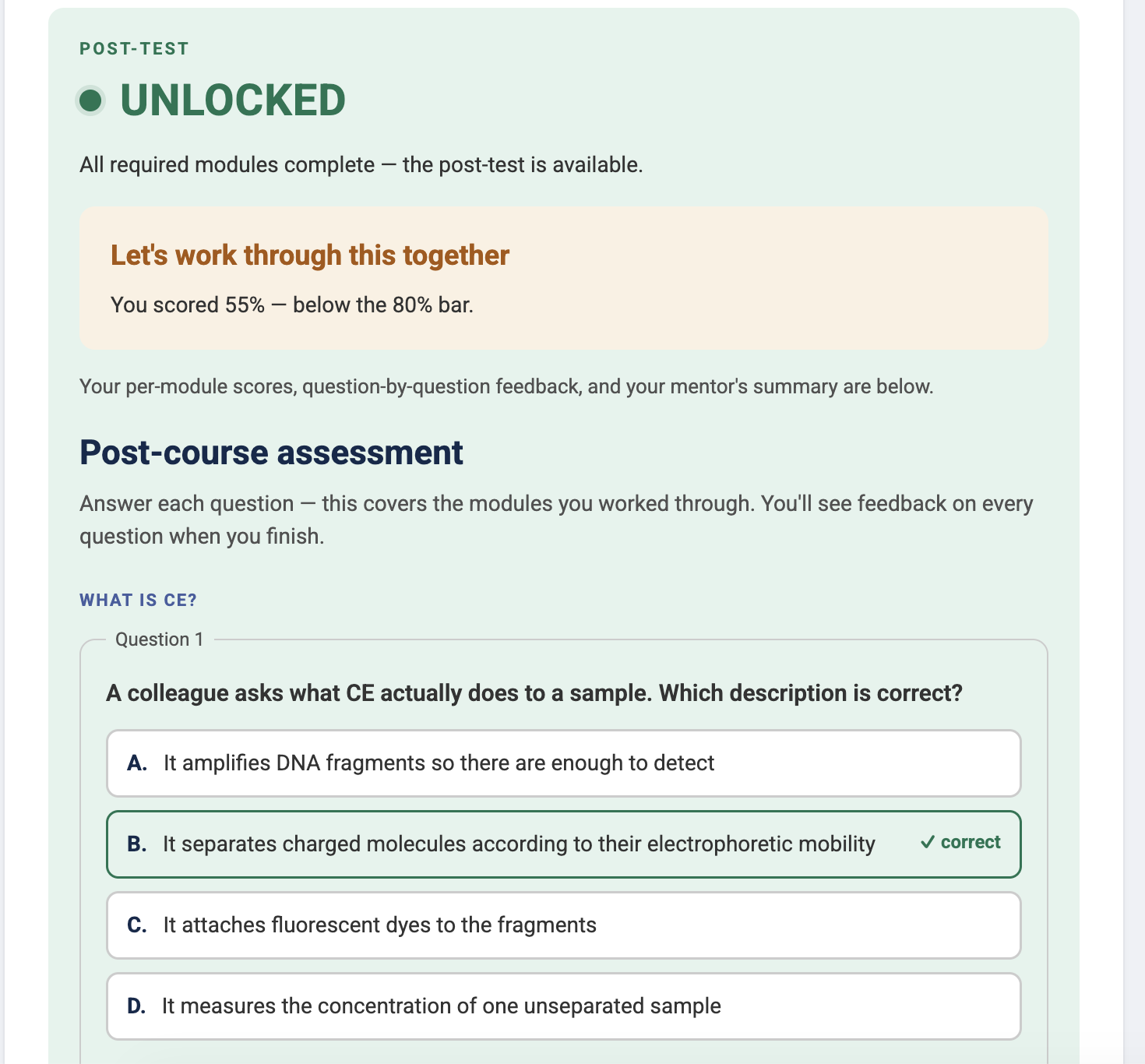
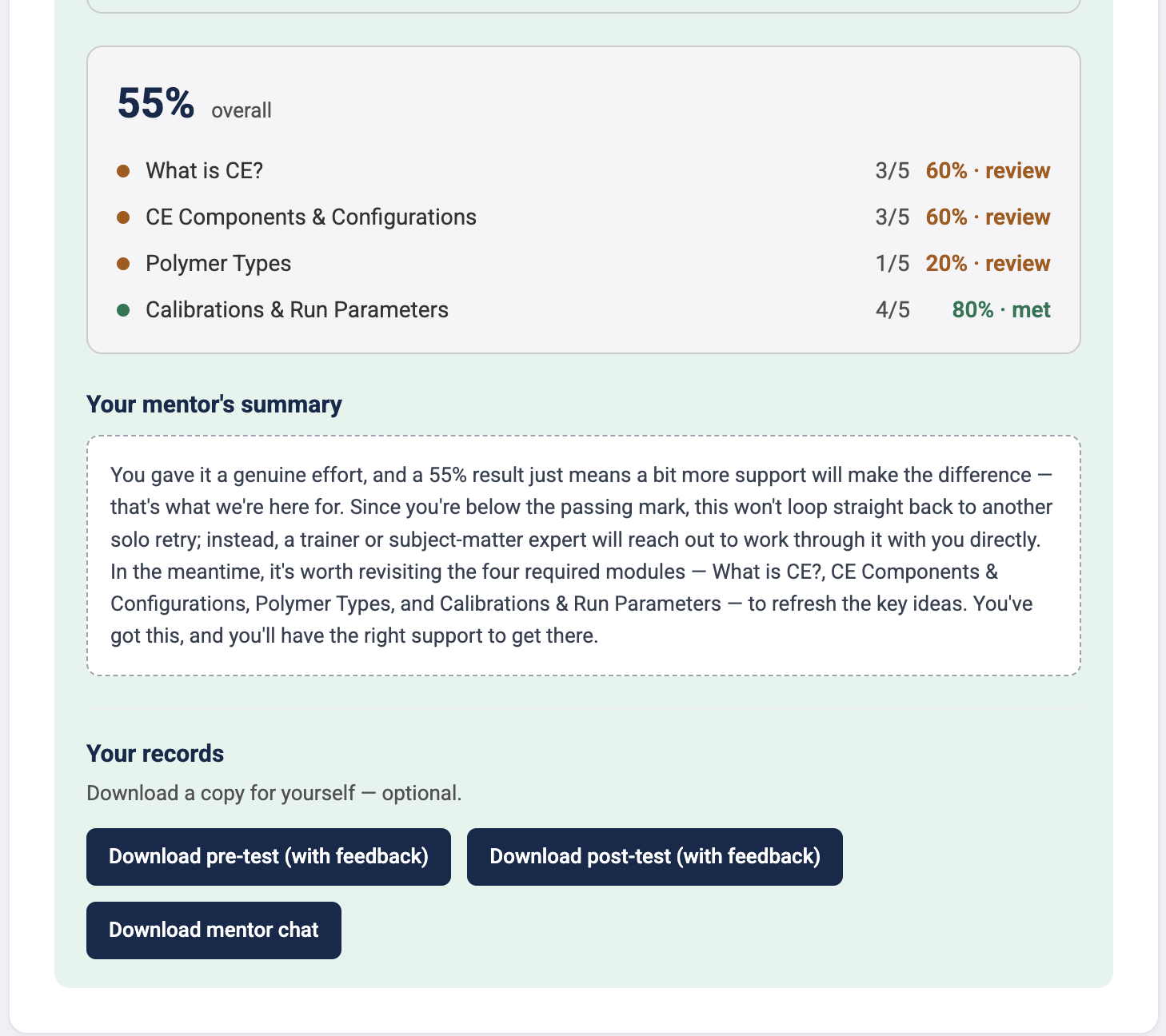
The system branches at the 80% mastery threshold. Learners who pass receive confirmation and completion records. Learners below the threshold receive review guidance, a mentor summary, and notice that a trainer or subject-matter expert will follow up.
Pass pathway · 80% or higher
The pass state combines assessment evidence with continued mentor support.Passing learners receive module scores, a mentor summary, and downloadable records.
Support pathway · Below 80%
The learner sees a clear, supportive message that the mastery threshold was not met.Module-level results guide review while the mentor explains the human follow-up pathway.
Testing & Insights
The pilot validated feasibility and clarified the next product questions.
Internal instructional design testers confirmed that the core flow worked, while surfacing important usability and learning-design improvements. There was no time to revise after the pilot; the findings below were not implemented during the internship.
The prototype worked end to end, including module access, learner persistence, and mentor responses.
Assessment quality needed refinement because some questions felt guessable and answer lengths sometimes hinted at the correct option.
Learners needed clearer guidance around what to do next, when they were done, and how the mentor should be used.
Internal testers encountered the intended refusal behavior, but strict refusals sometimes created friction. This pilot did not establish reliability across all possible questions.
Opening course modules outside the main app made it harder to use the mentor while studying.
Project Scope
As a prototype, the project showed feasibility before learner-impact measurement.
What this project demonstrated
The prototype showed that adaptive routing, guarded AI support, learner persistence, and completion reporting could work together in a single learning experience.
What would need more evidence
This project is a prototype and has not been applied to real learners. There is no target-group data yet, so learning-impact claims would need a structured learner pilot.
Reflection
Balancing AI flexibility with product accountability.
The most important product decision was not simply adding an AI tutor. It was deciding where AI should help and where it should not decide: generative support for explanations and coaching, fixed product rules for mastery, routing, and completion.